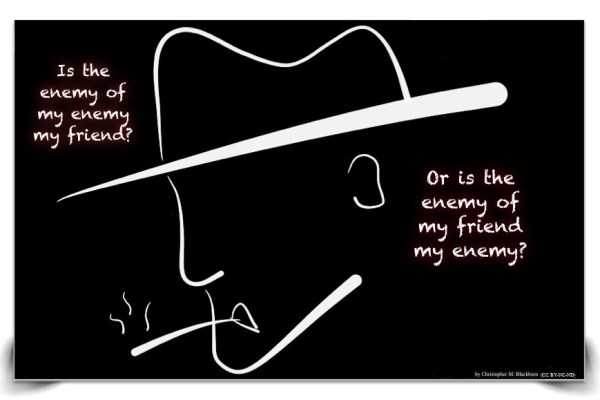

The Game – Part 1

Written by Dice

Both opponents have met and are in place. The stage is set. One side sets up the trap to lure his or her opponent in. But the Game is never completed so easily.

The newest weapon in the Game is SMS. Opponents can make challenges or counter their opponent by sending text messages or ‘texts.’

A ‘text’ bout is dependent on the player’s wit and composure. The player must be able to think quickly – a text takes seconds to reach its destination so delaying tactics are not available to the player.

The man is on the offensive, the woman on the defence. The man thinks he’s being social with his text chat with the typical, ‘How are you?’ and ‘What are you up to?’. This is all very friendly, a neutral stage of the Game if you like. But the Game cannot stay quiet for too long. The woman is most likely to make the first move, since they are known to want to test their opponent. One of the strongest moves a woman has is the ‘Suggestion Tactic.’ Women are experts at applying the ‘Why don’t you do this?’ move.

In this turn of events the man can have a selfish attitude, but to win he must appear as the ‘Gentleman’ and so if faced with this attack, a man has got to think fast. Through wishing to win over the woman, he must admit that he is under the mercy of her needs and must comply or counter with an excuse. Excuses for not complying with the Suggestion Tactic are difficult to design and, with the lack of time between moves in a text war, the man has little time to plan his next move, usually admitting defeat within the current battle.

This move is quick and decisive and, though it is considered the woman’s victory, it comes at a cost. The man does receive a form of point that is mentally recorded by the woman. These can be cashed in by the man, usually at the woman’s leisure in order to win the Game.

Every time we read this short satirical piece, we can’t help but chuckle. Dice’s matter-of-fact storytelling gives it such depth despite its surface context. Texting is such an intricate part of our lives now that we can’t help but be influenced by certain emoticons, the amount of kisses to pop on the end of a text, and so on. The relationship between men and women has never been so complicated. If you enjoyed Dice’s satire, check out some of his other pieces including, ‘The Writer’s Block‘ and ‘The Paper is a Stage‘.

Featured Image CC, woohoo_megoo

Snowflake

Written by Silver

It wasn’t the first time Skyla had seen snow, but it was the most she’d seen in a long time. Her father had been outside for the past hour shovelling it from their drive, working up a sweat in his new winter jacket and dusty work boots. As she sat by the window, Skyla watched her father with disinterest, occasionally adjusting her body warmer and the sleeves on her white Christmas jumper. She was fidgeting more than usual, her fingers twitching. Really, the snow would have been just fine, perhaps even amusing, if her dad wasn’t planning on a trip to Disneyland this weekend. With Skyla turning 12, it was meant to be a surprise for her birthday. But instead of sheer delight, she found the tang of bitterness. It was all around her, in the air, in her bones, in the stupid biscuit jar that she could never reach. And particularly after her mother had left only a couple of weeks ago.

Leanne had told Skyla she was leaving back in October. Ever since the accident, her mother had always blamed herself. Skyla supposed it was due to the fact she was driving at the time. But it was never her mother’s fault, it was the idiotic driver in the white van who wasn’t paying attention. Though Skyla had never voiced her opinions on the accident, Leanne always seemed to know the hidden truth. Skyla had pushed those thoughts far down inside of her. There was always hope that she would be able to walk again; a tiny spark that just needed to be ignited and tended to in the right way.

Her father was still shovelling snow. She desperately wanted to be outside, crunching her feet on the freshly laid powder. Maybe she would be able to one day, but paralysis was something that was very difficult to overcome. Skyla thought about the robotic legs the government was currently testing on paralysis patients; she hoped one day that could be her.

Snapped out of her daydream, Skyla’s father called to her – rather he mouthed her name through the window – and she wheeled over to the front door, skirting around the armchair.

“I’ve been calling you for ages, Sky.” Stephen said, shivering slightly.

“Oh, sorry.” Skyla cast her eyes to the ground.

Stephen scuffed his boots together and crouched to his daughter’s level. Taking off his gloves, he took his large, scraped hands and clasped hers, kissing them.

“Sky, I know it’s hard. And this damn weather is just frustrating as hell. But I’m going to make the most of this time with you.”

She looked up at this point, meeting his eyes. His face flushed, his nose a deep pink from the cold, but his eyes glistened. And there on his eyelash was the tiniest snowflake she’d ever seen.

“Dad, don’t move. Don’t flicker your eyelashes. Just give me a minute.”

The snowflake held its form for less than a second. But before it melted into her skin, Skyla saw the intricate pattern.

“I’ve just realised something, Dad,” she said as Stephen raised his eyebrows and fingered her blonde curls. “No snowflake is the same. They’re all different but eventually they come together to make a bigger picture. I think I’m a snowflake, Dad. My body’s now just a different pattern that’s all. Maybe I’ll get my old pattern back one day, or find a new pattern in electronic limbs. But the thing is, I still have a pattern just like that snowflake. And that’s what matters.”

Stephen smiled, “Well of course, honey, you’re named after the very sky snowflakes are born from.”

As part of the HHC for last month under the theme ‘Spark’, Silver’s short story is a special piece full of hope and determination. As a teenager, she feared she would be paralysed from the waist down following two horrible accidents. But luck was with her and recovered the feeling in her legs. However, not everyone is as lucky as that, with Skyla as a prime example. A heart-warming piece ready in time for Christmas. If you enjoyed Silver’s work, make sure you check out her poem ‘Spirit‘ and short story ‘Fraction‘. 

Featured Image // Julie Falk

Fraction

Written by Silver

congo_light

Sometimes it only takes one moment for life to spring into action. Image // Andre Thiel

The summer haze was thick within the forest; drops of dew hung languidly from leaves the size of a small bird, while the hot mist clung to boughs of giant foliage, leaving it gasping for cool air. Even for the animals in the Congo it was a warm day, and many tried to find shade under a canopy of leaves, overhanging rocks, or their dens in the cool dirt. The promise of rain was still several days away, but you could feel it in the air. If you were lucky enough to see through a gap in the fence of foliage, the clouds were dense and ready to burst, and the Congo’s inhabitants were ready.

To travel through the Congo is a bid to lose all sense of time; a perpetual twilight. Daylight would come but once every so often and, when it did, it seared through the trees, settling into a patch of chalked dirt, where maybe a snake or beetle would bask and snooze. Soon enough, the light disperses and fades into the half-light the forest knows so intimately, and the animals shrink back into their comfortable abodes. When darkness arrives, a wonderful silence emanates from the Congo, only to be replaced by the night-lovers chirping moments later. Under a cloak of indigo and black, a hubbub of activity takes place. Insomniacs add to the noise with their shuffling and pacing, elephant calves disturb bushes with their fights and tantrums, while chimpanzees look for trouble and play games of ‘spot the forest insect’. Other restless sleepers toss and turn, while those that need shut-eye will snore and breathe deeply, ignoring the blend of nature’s sounds.

A new day dawns and, with it, the same pattern: a circle of time. But it is a day closer to the storms; they can feel it in the air. It ripples through the forest, hitting some more than others, depending on their fashion of habits. Newly born animals risk dehydration, the elders too are at risk but they are wiser to the Congo’s ways, finding dew drops hidden in the highest canopies or broadest bushes. The most intelligent – or, perhaps, luckiest – find a remote stream, where the soil is softer and the sustenance richer. But as the heat cripples the hearts of many animals, it also weakens the heart of the Congo.

For a fraction, time stands still. And in that moment, numerous events occur. The dense mist shrivels into the undergrowth, awaiting its execution. The languid dew drops quiver and shrink, pushing themselves off their veined homes, to explode into the cracked mud below. And the animals scatter. Elder birds urge their youngest to spread their wings and fly, while small apes cling to their mother’s fur as she runs through the thicket at remarkable speed. Elephant calves send out sharp chirps to their kin, making sure they don’t get left behind in the frenzy. Snakes slide out of their small dens with their babies, coolly taking their time, while insects crawl over their bodies in a hurry. With most animals gone, only the weakest are left behind, bearing the same fate as the colossal boughs and trunks.

The cries of the smallest are ousted by the roaring crackle of the heat. A fury, a blaze, a rainbow of different shades of orange and red join together and take the Congo minute by minute. It spreads quickly and consumes foliage, fruit, and those that are young or frail – condemning them to a brutal end. But not all are taken by the orange blaze. The grey clouds begin to crowd together, their anger evident through the grumbling in throats and their flashes of migraines, coming and going as the pain pleases. Grumpy and exhausted by the smoke, the clouds crack their knuckles and jab at the fire with yellow bolts, unleashing their biggest weapon: rain.

It flows freely and harshly into the centre of the blaze, extinguishing the licking flames at the clouds’ feet. The orange fury begins to abate but then a last stab of war comes forth from its raging heart, whipping at the foliage with all its might. But it is no match for the grey clouds and drowns in a sea of murky water.

With the fire extinguished, the floods arrive, and the animals flit back to their homes. Only a fraction of time exists in the Congo, but only when it is the most critical does life notice.

Written on behalf of a Fiction Frenzy challenge last year, Silver’s aptly named ‘Fraction’ takes us into the heart of the Congo, where the animals mostly live in peace. Inspired by a BBC documentary series which followed a number of animals, Silver’s piece works to re-enact what happens when the forest fires are imminent. It’s a perfect piece to reflect the very nature of our ‘Light’ theme this month. To check out more of her work, click the links for poetry such as ‘Fudge‘ and ‘ Spirit‘. 

Little Red

Written by Bandit Queen

little_red_riding_hood

Run, Little Red. Faster and faster until you can’t anymore. Image // GettysGirl

Run, little girl, run.

The forest is not your friend now. Where are the little flowers you picked, their sweet scent similar to yours and their pastel colours dappling the dark grass in the wood? Where are your sun beams you danced between, that streaked through the darkness of the thick branches up above? They are all gone. Nettles sting your dancing feet and the summer sun has set. There is only the Hunter’s moon; a cool, silver stare cutting down upon your face, as tears stream down your cheek.

You should have listened to your mother. Words do well to the wise, not to the brave. What can words do for you now? You think to bargain with me? Prey do not bargain with their predators.

Run, girl, run.

Your ragged breaths twitch my ears. Your saccharine smell waters my mouth. Your watery eyes widen mine. You are divine.
A branch snaps. I falter. You turn.

Hairs rise on your skin as mine bristles in glee. I can see you fleeing from the pine where we met. You are running. A monstrous grin grows on my face. Can you see my teeth that will tear you apart? Can you see my body heave forward, while I begin my chase for you?

Red is a dangerous colour to wear, my love. Your cloak ripples like a scarlet river through the silver trees, and you weave in and out to try to lose me. Why do you run? I see blood on your nimble feet. The forest is no longer the refuge you loved, is it? You will paint the trees crimson and the flowers will turn pale like the moon. The forest will mourn until your body lurches and your throat turns raw from your screams.

Then you can run through the forest, past the mountains to the river, you can dance in the moonlight, and howl to the stars. Give your family, your love and guard, your elder in the wood. Leave your petty village behind: the resentment, the marriage, the hatred. You are brave. Why do you fear me when the monsters share your bed?

You stop. You do not run. There are no more tears.

The chase is over, my love.

Genuinely, we feel a little terrified for Little Red, here. This incredibly tense piece of short fiction was written by Bandit Queen on behalf of the July HHC under the theme ‘Chase’. As a predator hunting its prey, you can smell the fear within this piece. Inspired by the Brothers Grim story, Bandit Queen’s piece serves as a truly dark tale. The masquerade of fairytale slips into a stalker and a vulnerable young woman, fleeing for her life. It’s serious, and it’s horrifying. If you enjoyed Bandit Queen’s first published piece here on Inkblots, please leave her a like, or comment in the section below.  

Last Breath

Written by Rob

dracula_christopher_lee

Christopher Lee stars as Dracula. Last breath? I don’t think so. Image // Warner Bros, Dracula Risen from the Grave

I don’t find this easy to talk about. People say that it is good to get things out in the open; a problem shared is a problem halved; talking is good; other such platitudes. I say “people” weren’t there; they didn’t go through what I went through; they probably have never felt that degree of blind terror. Even as I write, I find I’m crying and trembling again. I feel like I’ve been branded; that moment will forever be burnt into my very being, like an ugly scar.

I wanted to run but I couldn’t move. I wanted to cry out but my lungs were paralysed. I wanted to look away but no part of me would respond to instruction. I wanted the earth to swallow me. I wanted anything but to be there and then.

There is no shortage of clever dicks who tell me I was in no danger; there was nothing to fear; the whole incident was entirely harmless. And there is a corresponding supply of those who like to take the scientific tack; telling me about natural processes of decay and ferment; biochemistry of gas production in a dead body; rigor mortis and the like. None of this helps.

I was alone in the front parlour, with Uncle Ernie, laid out in his coffin, paying my last respects. I had only been stood beside him for a few moments. Then Ernie spoke to me.

The proverbial king of short fiction, Rob’s HHC – written on behalf of last month’s theme “sigh” is one to leave a lasting impression. So, a dead man talking rather than walking. That there is a real fear – a subconscious one. Of course, Ernie didn’t really speak, though maybe he spoke to the narrator in a different way. If you enjoyed Rob’s short entry, you can view some of his other work such as ‘Shot Blast‘ and ‘Mirror, Mirror‘. 

The Bells of Campden

Written by Miss Smiley

bells_lone

Living, breathing bells? That’s horror, for sure. Image // Vladimer Shioshvili

Campden was a small province. It was peaceful. It was a sweet place – a place you’d want to raise your children. It was practically crime-free. A place you’d want to retire to and live out your life in. It was alive. It felt alive. There was none of this dead metal people tend to surround themselves in. The land breathed and danced. And then there were the bells.

To say that they rang would be an understatement. These bells didn’t just ring – they lived, they sang, each note a clear, precise, and weirdly organic sound. Their range spanned further than a normal church bell’s, their notes singing out whole provinces, calling them into church and court in the morning, ringing out long after they’d been struck.

If you believed the myths, the bells were alive. In back streets and behind closed doors, they whispered about them.

If a man was tried in court, he was tried before the bells. Mostly it was formality, they said. But every now and then, a bell would ring by itself during a trial. And that man was guilty – guilty as sin. The lawyers knew better than to speak for their client then. Once, a lawyer had protested and no one liked to talk about his story. That wasn’t the kind of thing you wanted your children to accidentally overhear, and who knew when they were listening?

It was worse to whisper about what happened to the guilty man, though. It was a story that each child heard, just once, when they were old enough. No one ever wanted to be told twice. No one ever needed to be told twice.

You see, the bells were alive. And everything that lives needs to eat.

Miss Smiley’s short story was submitted as part of a past HHC entry, with a Horror theme. It’s possibly more suited to October’s upcoming theme “fear”, but we liked it too much to consider leaving for too long. Besides the performance from the bells is particularly enthralling. If you liked Miss Smiley’s piece, and are utterly terrified of those bells, make sure you check out some of her other tales of sneaky horror, such as “Fetish” and “Rosebed“. 

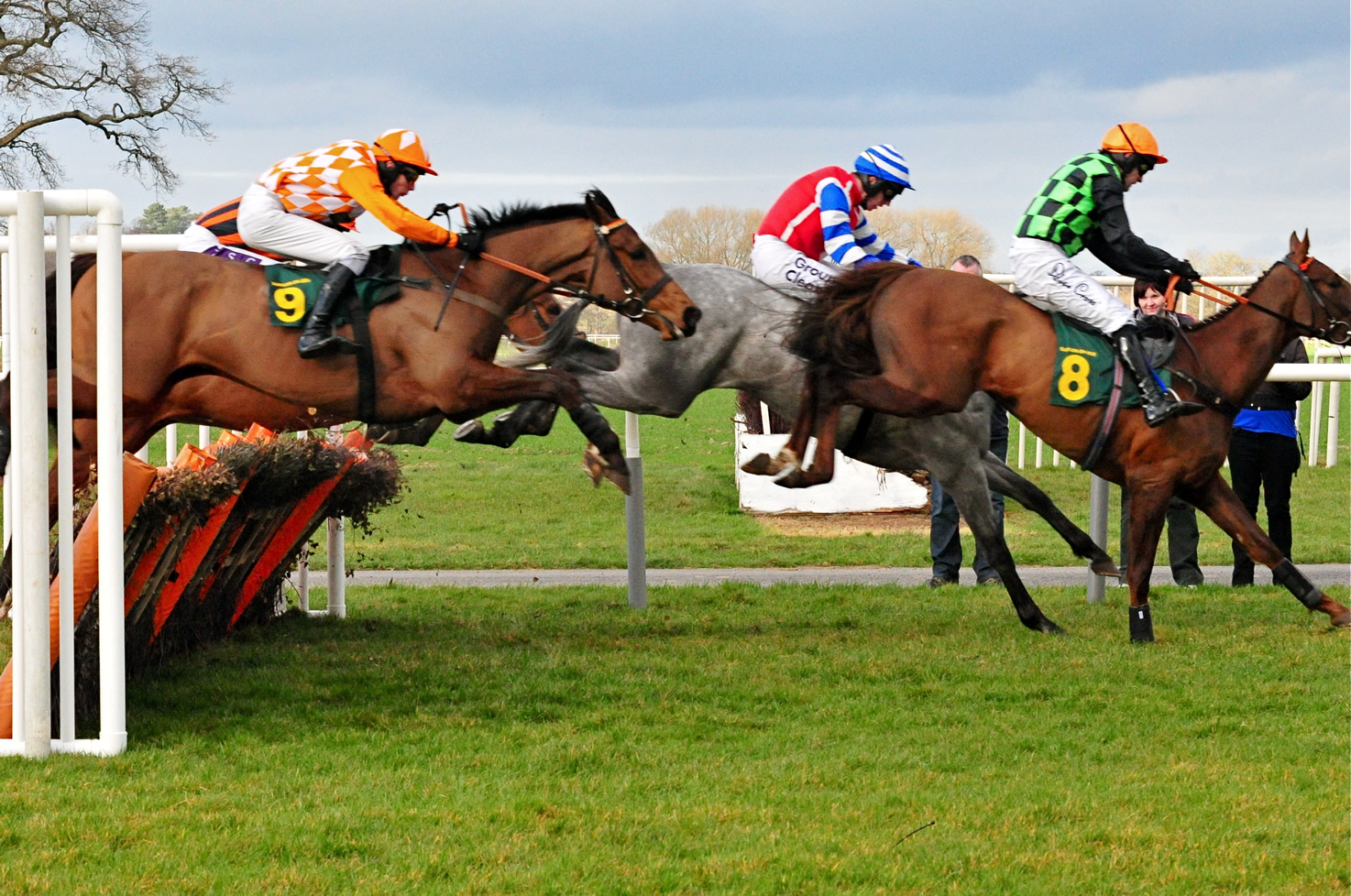
Race

Written by Terrestris Veritas

horse_racing

The race is on! Image // Paolo Camera

“Here we are today at the Pulchetown Races, live on Red FM, 92 – 96. It’s a beautiful day here with the sun splitting the stones. There is hardly a cloud in the sky, and the fashion statements today are formidable.”

“Indeed, Jim, there has been a fascinating turnout today in terms of the extremities of hats but, no doubt, each and every one cost a pretty penny. Though, all in all, they do look fabulous.”

“Right you are there, Henry. And now here come the jockeys with their horses. The race will begin in five minutes, so to introduce the racehorses we hand you over to your commentator; James Roche.”

“Thank you, Jim, and yes the day is glorious. Here come the eight competitors for today and their striking steeds. First on the line-up we have Thundersprint. Indeed, Thundersprint has had a hard season but today many patrons are betting hugely on him. Secondly, we have General Speed, thirdly Huge-Hoof, Roaring Beauty, and then Prancing Dafy. The final three on the right are Headspin, Sparkling-Winner, and Golden-Mane. Some excellent and extravagant names by their owners, for sure.

“And they’re off! Roaring Beauty takes the lead in a strong sprint, lunging ahead of the pack with Sparkling-Winner coming some way behind, Thundersprint third, Huge-Hoof, then GeneralSpeed, Golden-Mane, Headspin and Prancing Dafy bringing up the rear. The horses are snorting vigorously from the whips of the jockeys and – oh my – Prancing Dafy seems to have tripped over his own hooves, slamming into the ground and sending his rider flying into the air. Either way, Prancing Dafy is out of the race now with the line-up of the others horses unchanged.

“But it does seem that Roaring Beauty is struggling to keep the lead as Sparkling-Winner gradually pulls ahead, inch by inch, getting closer with each gallop. And after getting the inside position of the bend he does so, with Roaring Beauty taking second place on the first lap, Thundersprint just behind. Yet out of nowhere, it seems Thundersprint has found a new lease on life – beginning to live up to his name – as he sprints with such determination to claim victory and earn many patrons new-found wealth.  Continue reading →

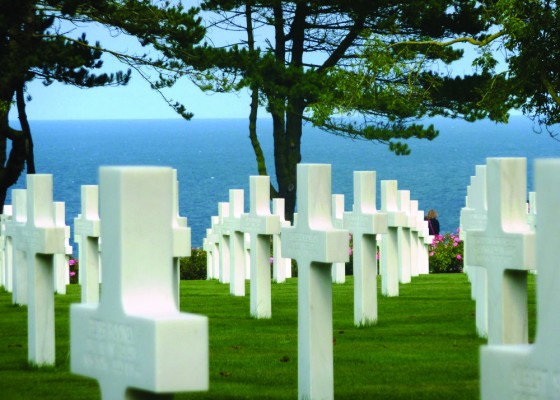
Summer 1943 – An Alexander Short

Written by Dice

d_day_70_anniversary

A summer breeze. Image // France Today

“Lovely day,” commented Jennifer.

“Yes it is,” agreed Alexander, “and feel that 1943 Summer breeze.”

“1943? That explains the soldiers, and the posters.”

Jennifer and Alexander had travelled through one of the Impossible Room’s many doors to a sunny city square with a green park in the middle. At different points around the square pairs of soldiers were stood chatting. Many of the walls and trees were World War Two propaganda and public information posters, most advising against giving away war secrets: “Keep – mum, she’s not all that dumb”, “Loose lips, sink ships” and “Careless talk costs lives” amongst the most popular.

The two were also dressed the part for the period. Alexander wore a standard grey suit with a white shirt and a tie with a simple stripped pattern, while Jennifer wore a plain long-sleeved blouse and a knee-length skirt.

“We’re in London aren’t we?” asked Jennifer.

“Yes, St James’s Square. And over there is the building we’re after – 31, Norfolk House,” replied Alexander pointing to a large brick building towards one of the square’s corners. It was a grand building, but no grander than any other the other buildings in the square.

“Well, let’s go then.”

“Hang on. We just need to wait… there, you see that window.” The window Alexander was referring to was a few floors up and was opened by a balding middle-aged man wearing a dark suit. “And if you look below that window,” continued Alexander tracing his pointing finger down to a women standing directly under the window looking up. Continue reading →

Teddy’s Tale

Written by Sparky

ted_film

We imagine this is exactly what Ted would do. Do not push that button, Ted. Image // Universal Pictures

I remember how it all ended. The story is almost legendary amongst what remains of my people. The noise, the smoke, the endless crush. But it all came later; this is how it begins.

In the centre of our planet was a machine and it ran the day-to-day business of the whole planet, ensuring the globe kept spinning, the sea had its tides and the volcanoes acted as they should. The machine even regulated night and day for those deep in the heart of the planet. Those at the heart of the machine acted as gods, controlling the fate of all who lived on the surface world. One youth of this tribe of stewards was responsible for our fall, unintentionally of course. His name is inscribed into our minds yet never spoken, lest we bring his fate on us once more.

He had a small teddy bear, handed down from father to son over generations. The ticking that emanated from its heart was a reminder of how even simple things could be enriched with technology. This bear had kept the boy company over the years when his father had to watch over the machine, in order to ensure its constant upkeep. They shared conversations of the past, of the hopes and dreams the two shared. But the bear longed to return to the surface world he originated from, before the time of control.

They went everywhere together, the boy and his bear, walking alongside the other. Their footsteps silent, the clockwork inside the bear’s chest the only sign of actual life between them. They had explored the machine’s various rooms and corridors over the lonely years; they knew every inch of their home. As a new day broke inside the machine, the bear seemed sadder than usual; he looked out on the complex with his dull, vacant stare. Between him and the boy there was an unspoken bond, they could almost read the other’s thoughts. That particular morning, the boy knew the bear wanted to explore again, to get closer to the machine than they ever been allowed before.

They got to the door outside the heart of the machine. The door that would allow those who entered the power to control an entire planet. The bear looked at it with a sigh as the control was set above the reach of either him or the boy.

The boy waved the bear toward him – he didn’t want to be caught here, he wasn’t allowed. The bear plodded along after him, silently calculating the best way to get into that room. He would get that opportunity sooner than he realised. The door slid open on its brass hinges to the slightest hiss of steam, and the bear hesitated then turned. It was open, the steward’s shadow retreating down the hallway. So the furry dog-eared bear hurried.

He only just made it inside, his little legs barely making it over the threshold before the door shut behind him. He walked to the large brass console in front of him and scrambled up between the chair and the panels. Looking out over the endless buttons and levers, his eyes fell on the wall of screens fizzing to life in front of him. And, in that moment, he remembered what it was like to breathe pure air, feel the warmth on his wool as the sunlight bathed him in its glow. If he could cry, a tear would have formed in the corner of his eye. He took a few small steps and reached down to flip open the protective cover on the centre button. The big red button. The big red button that read “Do Not Press”. The bear raised one paw and gathered as much force as he could and brought it to bear on that button. Alarms rang out across the complex and scenes of destruction began to fill every screen in front of him. The end had come, all because of a bear’s resentment at losing the freedom he once enjoyed.

The machine exploded in a giant fireball, consuming the bear within its inescapable heat, yet before it did, he smiled and whispered one last word.

“Oops.”

Sparky’s short fiction was inspired by an earlier Half Hour Challenge and written for our Inkwell forum. It’s an interesting piece that covers the idea of freedom and how one small change can become a catalyst for much bigger consequences. Sure it’s cliché and it screams to the “Lost” TV series fans, but buttons do come with consequences, they are just smaller in reality. If you enjoyed Sparky’s piece, make sure you check out his beautiful poem, “I Wish“. 

The Start of Something Beautiful

Written by Ricardo

Having a quiet night in? Pizza makes it all better.

Having a quiet night in? Pizza makes it all better.

The light which illuminated Grace’s front room was not the kind she was accustomed to. At this time (which was 21:03 on a Saturday night for anybody out of the know) Grace would usually have just landed on the sofa after spending exactly twenty-four minutes soaking in the bathtub and then dressing in her Marvel pyjamas; the television would be on Channel Four and she would begin watching her shows three minutes late.

But this time was different. Instead of the kit-cat clock which hung on her cream walls striking 21:03, its unblinking, unreal eyes gazing around the room as if afraid that she wouldn’t turn up one day and leave it with only its own incessant ticking for company, the clock showed 21:00 when Grace’s backside hit the sofa. This time, it wasn’t shielded from the eyes of her kit-cat clock with her usual Marvel pyjamas. Today she wore a Batman onesie. And to complete the utter anarchy which was her life in these few desperate moments, the light which illuminated her front room was the glow of the moon instead of her television.

And so Grace sat upon the sofa, alone except for her kit-cat clock, which for the moment she decided to called Terry, and looked around herself. And she noticed that by the light of the moon, everything was in fact a lot darker. And at 21:03 she turned the television on, and the light of a floating number four joined the moonlight in its game of showing Grace the darkest corners of her own front room. And she began to cry. Continue reading →